
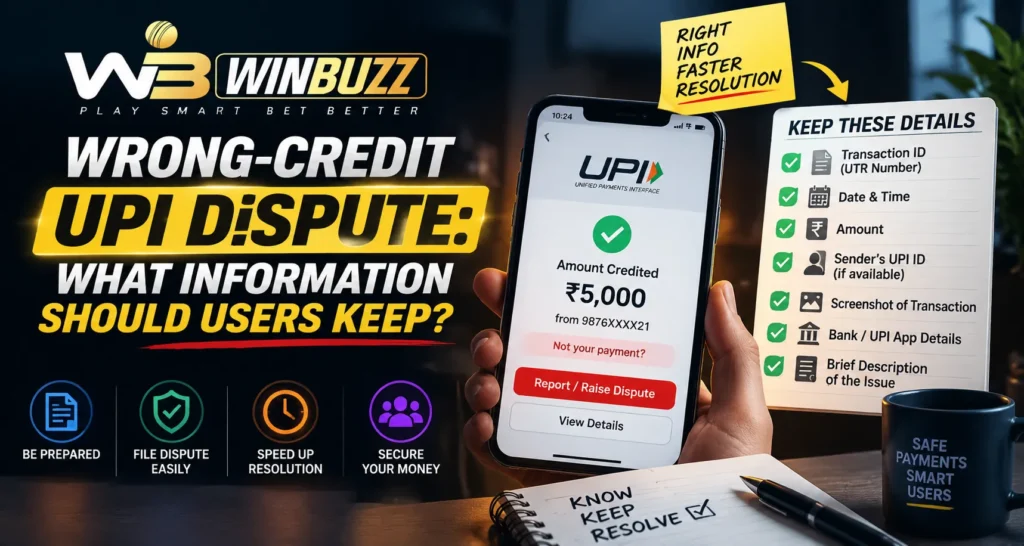
Digital payments have made transactions faster and easier, but mistakes can sometimes happen during money transfers. A wrong-credit UPI situation occurs when funds are transferred to an incorrect account or when transaction details do not match the intended payment. On Winbuzz, users managing payment-related activities should understand what information to keep when reporting a UPI dispute and why accurate records are important.
Maintaining proper transaction details helps users explain the issue clearly and allows payment providers or support teams to review the situation more effectively.
What Is a Wrong-Credit UPI Dispute?
A wrong-credit UPI dispute occurs when a payment is credited to an incorrect recipient or when there is confusion about where the transferred amount has been received.
This situation may happen because of:
- Incorrect UPI ID entry
- Wrong account selection
- Typing mistakes
- Miscommunication during payment
- Transaction processing issues
A dispute process helps investigate the transaction and determine the appropriate resolution based on available records.
Why Keeping Payment Records Is Important
When a UPI issue occurs, transaction information becomes the main source of verification.
Without proper details, it may become difficult to identify:
- The sender
- The recipient
- The transaction time
- The payment status
- The transfer reference
After completing a Winbuzz Login, users should keep their payment records organized to make future transaction reviews easier.
Important Information to Keep for a UPI Dispute
Users should maintain several important details whenever they make digital payments.
UPI Transaction ID
The UPI transaction ID is one of the most important pieces of information.
It helps payment systems identify a specific transaction and track its status.
Users should save:
- Transaction reference number
- UPI reference ID
- Payment confirmation details
Date and Time of Payment
The exact timing of a transaction helps match records across different systems.
Important details include:
- Payment date
- Approximate transaction time
- Time shown in banking records
This information can help identify the correct payment during investigation.
Amount Transferred
Users should record the exact amount involved in the dispute.
This helps confirm:
- The value of the transaction
- Whether multiple payments occurred
- Whether the amount matches account records
Recipient Details
If available, users should keep details related to the payment receiver.
These may include:
- UPI ID
- Displayed beneficiary name
- Bank details shown during payment
This information helps determine whether the payment was sent correctly.
Keep Screenshots of Payment Confirmation
Screenshots can provide useful evidence during a dispute.
Helpful screenshots may include:
- Successful payment message
- Transaction history entry
- UPI confirmation page
- Error messages
- Bank notifications
Users accessing the Winbuzz App should ensure screenshots do not expose unnecessary private information.
Avoid sharing:
- UPI PIN
- OTP codes
- Passwords
- Complete security credentials
Understanding Common Reasons for Wrong-Credit Issues
Wrong-credit situations can occur for different reasons.
Incorrect UPI ID Entry
A small typing mistake can send money to a different account.
Similar Account Names
Some users may select the wrong recipient when multiple names appear similar.
Payment Confirmation Errors
Technical issues may create confusion between sender and recipient records.
Manual Entry Mistakes
Entering payment details without verification increases the chance of errors.
Steps to Take After a Wrong UPI Credit
If a user notices a wrong-credit transaction, quick action can help.
Recommended steps include:
- Check transaction details
- Save the payment reference number
- Review bank records
- Contact the relevant payment Support channel
- Provide accurate transaction information
Users should avoid making additional payments while the issue is being reviewed.
What Information Should Not Be Shared?
While transaction details are useful, some information must remain private.
Never share:
- UPI PIN
- OTP
- Passwords
- Card security codes
- Account login credentials
A legitimate support process should not require confidential authentication information.
How Payment Providers Review UPI Disputes
UPI dispute reviews generally involve checking transaction records from different systems.
The review may consider:
- Sender bank records
- Recipient account information
- Transaction reference numbers
- Payment timestamps
- Processing status
Accurate information helps make the review process smoother.
How to Prevent Wrong-Credit UPI Issues
Users can reduce payment mistakes by following simple safety practices.
Helpful steps include:
- Verify recipient details before payment
- Check beneficiary name carefully
- Avoid rushing transactions
- Save payment confirmations
- Use trusted payment applications
- Review transaction history regularly
Careful verification can prevent many avoidable payment problems.
Why Transaction Awareness Matters
Digital payments depend on accuracy and user attention.
Understanding how UPI transactions work helps users:
- Track payments better
- Identify problems quickly
- Provide correct dispute information
- Avoid repeated mistakes
When managing payments connected with Winbuzz Com, maintaining organized transaction records can help users handle payment concerns more efficiently.
Importance of Secure Payment Habits
Good payment habits are important for protecting personal and financial information.
Users should:
- Keep banking apps updated
- Avoid unknown payment links
- Protect account credentials
- Monitor transaction notifications
Strong security practices reduce the chances of payment-related problems.
Conclusion
Wrong-credit UPI disputes require accurate information and proper transaction records to support effective investigation. Keeping details such as transaction IDs, payment timestamps, amounts, recipient information, and confirmation screenshots can make the dispute process clearer.
Users should always protect sensitive credentials while sharing only the necessary transaction information through trusted channels. Careful payment verification and good record-keeping can help prevent many UPI-related issues.
FAQs
What is a wrong-credit UPI dispute?
A wrong-credit UPI dispute occurs when money is transferred to an incorrect account or when there is uncertainty about a payment destination.
What information should I keep for a UPI dispute?
Keep transaction IDs, payment dates, amounts, recipient details, and confirmation records.
Can I share my UPI PIN during a dispute?
No. UPI PINs, OTPs, and passwords should never be shared.
Why are screenshots useful for payment disputes?
Screenshots can provide transaction evidence, including payment status and reference details.
How can I avoid sending money to the wrong UPI account?
Verify the UPI ID and beneficiary name carefully before confirming any payment.
How are UPI disputes reviewed?
Payment providers compare transaction records, references, and account information to investigate the issue.


