
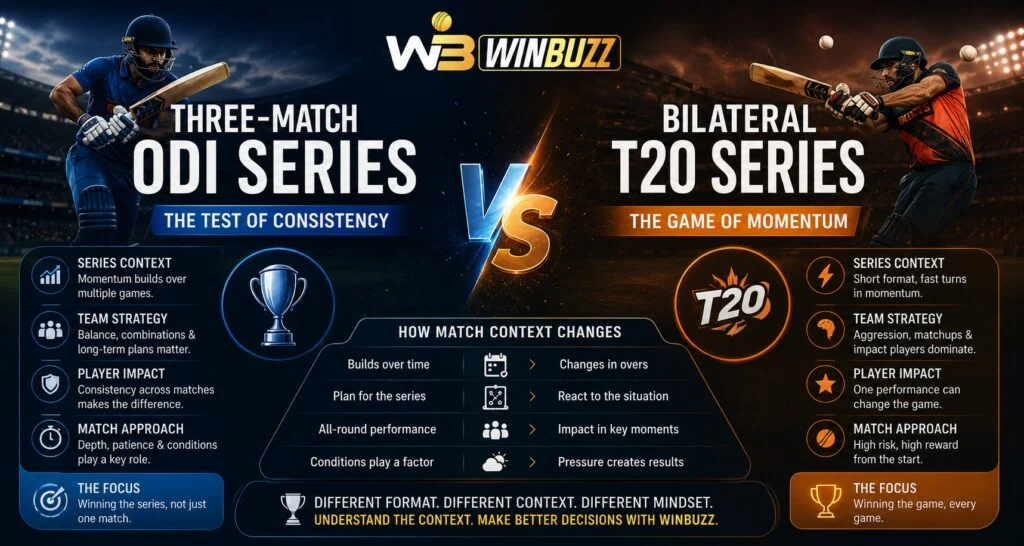
International cricket series formats can create very different challenges for teams, even when the same two sides compete against each other. A three-match ODI series requires long-term planning, while a bilateral T20 series demands quick adjustments and aggressive strategies. For Winbuzz users following cricket analysis, understanding how match context changes between these formats helps explain team selections, tactics, and performance expectations.
When users access cricket updates through Winbuzz Login, they can follow how teams approach different formats and why strategies that work in one series may not produce the same results in another. Match conditions, player roles, and team objectives often change depending on the format being played.
Understanding Three-Match ODI Series
A three-match ODI series gives teams limited opportunities to make an impact but still requires detailed planning. Unlike a longer tournament, every match carries significant importance because one defeat can heavily influence the series outcome.
Key features of ODI series include:
- Longer match duration
- Greater importance of batting depth
- Need for balanced bowling options
- More time for tactical adjustments
Teams must balance attacking cricket with consistency because every phase of a 50-over match matters.
How ODI Cricket Requires Different Planning
ODI cricket combines elements of patience and aggression. Teams must build innings carefully while also preparing for late acceleration.
Important ODI strategies include:
Building Strong Partnerships
Batters usually focus on creating partnerships before increasing scoring speed. Losing wickets too quickly can prevent teams from reaching competitive totals.
Managing Bowling Resources
Captains must plan how to use:
- Fast bowlers during different phases
- Spinners in middle overs
- Death-over specialists
With 50 overs available, managing resources effectively becomes a major factor.
Understanding Bilateral T20 Series
T20 cricket operates at a much faster pace. In a bilateral T20 series, teams have fewer overs to recover from mistakes, making every decision more immediate.
Important characteristics include:
- Aggressive batting approach
- Specialized player roles
- Greater focus on match-ups
- Quick tactical changes
A three-match T20 series can change direction rapidly because a single outstanding performance may decide the result.
Why T20 Match Context Changes Quickly
T20 cricket creates high-pressure situations because teams have limited time to respond.
Factors that influence T20 outcomes include:
- Powerplay performance
- Boundary-hitting ability
- Bowling variations
- Fielding impact
- Final-over execution
A poor start can create immediate pressure, while a strong opening phase can put opponents on the defensive.
Comparing Player Roles in ODI and T20 Formats
Players often have different responsibilities depending on the format.
For example:
In ODIs
Players may focus on:
- Building innings
- Managing strike rotation
- Maintaining consistency
- Contributing across long phases
In T20s
Players often focus on:
- Quick scoring
- Specialized bowling roles
- Aggressive fielding
- Short-term impact
This is why a player’s success in one format does not always guarantee similar results in another.
How Team Selection Changes Between Formats
Selectors consider different requirements when choosing squads.
ODI selections may prioritize:
- All-round ability
- Batting depth
- Bowling variety
- Consistency
T20 selections may focus more on:
- Power hitters
- Specialist bowlers
- Athletic fielders
- Match-changing abilities
Understanding these differences Helps fans analyze why certain players are selected for specific series.
Importance of Match Context in Cricket Analysis
The same teams can produce different results depending on the format and conditions. A team that dominates T20 cricket may face different challenges in ODIs because the game demands greater patience.
Users following cricket discussions through Winbuzz Com can better understand performances by considering:
- Format requirements
- Team strategies
- Player roles
- Match situations
Looking only at final scores may not explain the complete story.
How Technology Helps Fans Follow Different Formats
Modern cricket platforms allow fans to follow multiple series formats and understand tactical changes. Through the Winbuzz App, users can stay updated with match information and follow how teams adapt across different competitions.
However, understanding the difference between formats remains important because statistics and performances need proper context.
Common Mistakes When Comparing ODI and T20 Performances
Fans sometimes compare players and teams without considering format differences.
Common mistakes include:
- Comparing strike rates directly
- Ignoring match duration
- Overlooking player roles
- Judging teams from one format only
A player’s value depends on how effectively they perform the role required in that format.
Following Cricket Context Responsibly
Cricket analysis becomes more meaningful when users understand the reasons behind team decisions. Whether following ODIs or T20 series, focusing on strategy, conditions, and player roles creates a deeper understanding of the game.
Users should also maintain secure account habits and protect their Winbuzz ID details while accessing online cricket information.
Conclusion
Three-match ODI series and bilateral T20 series may feature the same teams, but the match context is completely different. ODIs require patience, planning, and balance, while T20 cricket demands quick decisions and immediate impact. By understanding these differences, fans can better appreciate team strategies, player roles, and the changing dynamics of international cricket.
Frequently Asked Questions (FAQs)
1. What is the main difference between ODI and T20 cricket?
ODIs involve 50 overs per side and require longer-term planning, while T20 matches focus on quick decisions and aggressive strategies.
2. Why do teams approach ODI series differently from T20 series?
The formats require different skills, with ODIs emphasizing consistency and T20s emphasizing rapid impact.
3. Can a successful T20 player struggle in ODIs?
Yes. Each format requires different skills, roles, and strategic approaches.
4. Why is match context important in cricket analysis?
Match context explains why teams make certain decisions and helps provide a clearer understanding of performances.
5. How does team selection differ between ODI and T20 cricket?
ODI teams often prioritize balance and depth, while T20 teams focus on specialized skills and quick impact.
6. Why should fans understand format differences?
Understanding format differences helps fans evaluate players and teams more accurately.


